Showing posts with label Chemistry. Show all posts

Monday, October 19, 2009

The Vocabulary and Concepts of Organic Chemistry


The Vocabulary and Concepts of Organic Chemistry
Publisher: Wiley | 912 pages | June 3, 2005 | ISBN 0471680281 | PDF | 6 MB

This book is a basic reference providing concise, accurate definitions of the key terms and concepts of organic chemistry. Not simply a listing of organic compounds, structures, and nomenclatures, the book is organized into topical chapters in which related terms and concepts appear in close proximity to one another, giving context to the information and helping to make fine distinctions more understandable. Areas covered include: bonding, symmetry, stereochemistry, types of organic compounds, reactions, mechansims, spectroscopy, and photochemistry.

Download:
Link_1
Or
Link_2

Saturday, October 17, 2009

Biophysical Chemistry


Alan Cooper, “Biophysical Chemistry”
Royal Society of Chemistry | 2004 | ISBN: 0854044809 | 184 pages | PDF | 17,3 MB

Biophysical Chemistry covers the physical chemistry of biological macromolecules and the experimental techniques used to study them. Topics covered include: an introduction to biological molecules; spectroscopy, mass spectrometry and hydrodynamics of macromolecules; a "bluffer's guide" to molecular thermodynamics; biomolecular kinetics; chromatography and electrophoresis; and single-molecule methods. The easily digestible, pragmatic approach captures the reader with the fascinating challenges the subject poses for theoretical and experimental scientists. This book will be ideal for early undergraduates studying chemical or physical sciences and will act as a basis for more advanced study. Students in other areas of biological sciences will appreciate the less intimidating approach to physical chemistry as demonstrated here. Ideal for the needs of undergraduate chemistry students, Tutorial Chemistry Texts is a major series consisting of short, single topic or modular texts concentrating on the fundamental areas of chemistry taught in undergraduate science courses. Each book provides a concise account of the basic principles underlying a given subject, embodying an independent-learning philosophy and including worked examples.

Download:
Link_1
Or
Link_2

Wednesday, October 14, 2009

Physical Chemistry for the Life Sciences by: Peter Atkins Julio de Paula


Physical Chemistry for the Life Sciences by: Peter Atkins Julio de Paula
Publisher: W. H. Freeman | ISBN: 0716786281 | 2005-06-17 | Pages: 699 | PDF | 3 MB

The behaviour of those macromolecules and molecular assemblies that have vital roles in all living organisms is grounded in physical chemistry. Physical principles determine the stability of proteins and nucleic acids, the rate at which biochemical reactions proceed, the transport of molecules across biological molecules; they allow us to describe structure and reactivity in complex biological systems, and make sense of how these systems operate. Physical Chemistry for the Life Sciences fills a void in the textbook market by offering a balanced presentation of the concepts of physical chemistry, and their extensive applications to biology and biochemistry.

It is written to straddle the worlds of physical chemistry and the life sciences and to show students how the tools of physical chemistry can elucidate and illuminate biological questions. Opening with a suite of chapters on Biochemical Thermodynamics, with a focus on energy conversion in biological cells and the factors that stabilize proteins, nucleic acids, and cell membranes, the book goes on to explore the Kinetics of Life Processes, examining the rates of chemical reactions, how rates can help characterise the mechanism of a reaction, and how enzymes affect reaction rates. A third section, Biomolecular Structure, looks at how concepts of physical chemistry can be used to establish those 'rules' that govern the assembly of complex biological structures, while the final section, Biomolecular Spectroscopy, describes the major techniques in biochemistry that are being applied to help us to explore biochemical processes and systems ever further. Physical Chemistry for the Life Sciences places emphasis on clear explanations of difficult concepts, with an eye toward building insight into biochemical phenomena. A rich palette of pedagogical features, including worked examples, illustrations, self-tests, and case studies, support student learning throughout, while special attention is given to providing extensive help to students with those mathematical concepts and techniques that are so central to a sound understanding of physical chemistry. Balancing clarity and rigor of exposition of basic concepts with extensive discussion of biological techniques and processes, Physical Chemistry for the Life Sciences is the perfect resource for every life science student who seeks to master those essentials of physical chemistry that underpin life itself. Pedagogy: - A Biochemical link at the start of each section explains how the physical chemistry content of the section is related to a biological concept, providing clear connections to students and acting as motivators for understanding - Toolbox sections describe techniques, and link experimental method with physical chemistry concepts, so the student can understand how experimental techniques are used to probe and solve chemical questions - Maths comments explain mathematical relationships and background necessary for solving problems, providing guidance and insight to bolster student understanding - Derivations present detailed derivations of key equations, and delineate intermediate steps, showing the student the enormous power of even simple mathematics - Worked examples illustrate the concepts being presented, empowering the student to apply the concepts for themselves - Self tests occur throughout the chapters, to enable students to immediately test their understanding - Checklists of key ideas at the end of each chapter provide a bulleted list of the information students should grasp from the chapter, facilitating student revision - End of chapter exercises come in three varieties, to enable students to apply the concepts introduced and check their understanding: - Discussion questions stimulate the qualitative understanding of problems - Exercises assess quantitative understanding - Projects stimulate more in-depth examination of questions at both a qualitative and quantitative level Online Resource Centre - Web links for each chapter, pointing students to interesting sources of related information and data, to facilitate self-directed learning - A list of key equations for each chapter, to help students revise and master the key mathematical concepts that underpin the subject - Living graphs, which present graphs from the text in interactive format, and enable students to strengthen their learning - Full colour artwork from the text in downloadable form, to facilitate lecture preparation --This text refers to the Hardcover edition.

Download:
Link_1
Or
Link_2

Mathematics for Chemistry & Physics By George Turrell


Mathematics for Chemistry & Physics By George Turrell
Publisher: Academic Press | ISBN: 0127050515 | 2001-12-15 | Pages: 400 | PDF | 9 MB

Chemistry and physics share a common mathematical foundation. From elementary calculus to vector analysis and group theory, Mathematics for Chemistry and Physics aims to provide a comprehensive reference for students and researchers pursuing these scientific fields. The book is based on the authors many classroom experience.

Designed as a reference text, Mathematics for Chemistry and Physics will prove beneficial for students at all university levels in chemistry, physics, applied mathematics, and theoretical biology. Although this book is not computer-based, many references to current applications are included, providing the background to what goes on "behind the screen" in computer experiments.

Download:
Link_1

Tuesday, October 13, 2009

Medicinal Chemistry: A Molecular and Biochemical Approach by: Thomas Nogrady, Donald F. Weaver


Medicinal Chemistry: A Molecular and Biochemical Approach by: Thomas Nogrady, Donald F. Weaver
Publisher: Oxford University Press, USA | ISBN: 0195104560 | 2005-07-28 | Pages: 672 | PDF | 21 MB

Fully updated and rewritten by a basic scientist who is also a practicing physician, the third edition of this popular textbook remains comprehensive, authoritative and readable. Taking a receptor-based, target-centered approach, it presents the concepts central to the study of drug action in a logical, mechanistic way grounded on molecular and biochemical principles. Students of pharmacy, chemistry and pharmacology, as well as researchers interested in a better understanding of drug design, will find this book an invaluable resource. Starting with an overview of basic principles, Medicinal Chemistry examines the properties of drug molecules, the characteristics of drug receptors, and the nature of drug-receptor interactions.

Then it systematically examines the various families of receptors involved in human disease and drug design. The first three classes of receptors are related to endogenous molecules: neurotransmitters, hormones and immunomodulators. Next, receptors associated with cellular organelles (mitochondria, cell nucleus), endogenous macromolecules (membrane proteins, cytoplasmic enzymes) and exogenous pathogens (viruses, bacteria) are examined. Through this evaluation of receptors, all the main types of human disease and all major categories of drugs are considered. There have been many changes in the third edition, including a new chapter on the immune system. Because of their increasingly prominent role in drug discovery, molecular modeling techniques, high throughput screening, neuropharmacology and genetics/genomics are given much more attention. The chapter on hormonal therapies has been thoroughly updated and re-organized. Emerging enzyme targets in drug design (e.g. kinases, caspases) are discussed, and recent information on voltage-gated and ligand-gated ion channels has been incorporated. The sections on antihypertensive, antiviral, antibacterial, anti-inflammatory, antiarrhythmic, and anticancer drugs, as well as treatments for hyperlipidemia and peptic ulcer, have been substantially expanded. One new feature will enhance the book's appeal to all readers: clinical-molecular interface sections that facilitate understanding of the treatment of human disease at a molecular level.

Download:
Link_1

Sunday, October 11, 2009

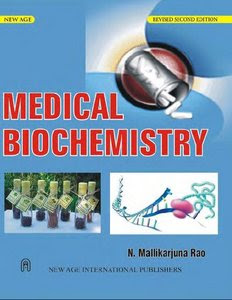
Medical Biochemistry


N. Mallikarjuna Rao., “Medical Biochemistry”
New Age International | 2006 | ISBN: 8122418236 | 837 pages | PDF | 6 MB

PREFACE TO THE SECOND EDITION
I attempted to provide essential information on molecular basis of health and disease
that is mainly related to life of surviving cell(s) in the first edition of the book. However life
cycle of cell(s) includes cell(s) birth and cell(s) death apart from survival. For the last couple
of years these frontier areas are advancing rapidly which is viewed by many as good sign
for development of :
(a) new therapy or therapeutics for cancer
(b) immortalized cells.
The latter fuels growth of biotechnology and pharmaceutical industries also. Hence, in
the second edition two chapters—1. Biochemistry of cell cycle (cell birth) 2. Biochemistry of
apoptosis (cell death) are added.
As living organisms evolved from simple unicellular to highly complex multicellular
mammals, several new systems and organs were developed. For example, blood which acts
as vehicle or communication between various locations of body, immune system which
protects body from intruders or foreign organisms.
Parkinsonism, psychosis, depression, Schizophrenia, loss of taste and olfaction are due
to disturbances in nervous, taste and olfactory systems. Various organs present in body
perform several organ specific functions which are essential for life. If functions of these
organs are disturbed, diseases in which may culminate in death. So, in this edition biochemistry
of blood including immune response in Chapter-32; molecular and cellular mechanism of
learning, memory, behaviour, taste and olfactory in biochemical communications Chapter;
tests, procedures that are done in hospital biochemistry laboratory to assess functions of
liver, kidney in Chapter-33 and thyroid in Chapter-29 are detailed.
Depending on disease a particular constituent of blood is either elevated or lowered.
Diagnosis and prognosis of disease usually involves detection and measurement of various
blood constituents in hospital biochemistry laboratory. Therefore advanced techniques like
high performance liquid chromatography (HPLC), affinity chromatography, and general
techniques like centrifugation and dialysis, instruments from spectrophotometer to auto
analyzer and methods used for detection and quantitation of blood constituents like
carbohydrates, proteins, lipids, nucleic acids, enzymes, electrolytes etc., in health and disease
are detailed in Chapter-34.
Humans and other mammals are able to remove waste products, toxins, foreign
compounds from blood and organs in the form of urine. In disease, composition of urine
varies from that of healthy state. So, detection, quantitation of various constituents of urine
is carried out in hospital biochemistry laboratory to confirm diagnosis of diseases. In Chapter
34, methods for detection and estimation of urine constituent under normal and diseased
conditions are also detailed.
Most striking feature in this edition of the book is inclusion of biochemical aspects of
diseases or disease causing organisms common to tropical countries like malaria, tuberculosis,
peptic ulcer or gastritis, pneumonia, leishmaniasis, giardiasis, trypanosomiasis etc. Since
most of the organisms are developing resistance to the existing drugs, there is need for
development of new drugs which requires thorough biochemical knowledge of these diseases
as well as disease causing organisms. Apart from adding new chapters, all existing chapters
have been updated by adding new subject matter. References of each chapter updated by
including reviews, books, research articles etc. Further, number of unsolved problems have
been increased in most of the chapters.

Download:
Link_1
Or
Link_2

Friday, October 9, 2009

Reference Book on Chemical Engineering, Volume 1


D. Sen., “Reference Book on Chemical Engineering, Volume 1”
New Age International | 2005 | ISBN: 8122423310, 8122416608 | 363 pages | PDF | 2,15 MB

PREFACE
A Chemical Engineer needs to know not only the inside changes in a Production
Process viz. Chemical, Physical, Thermochemical, Thermodynamics and Kinetics, but
also he has to know the basics of other engineering disciplines as well as current
developments. During my long service period in Production, Process Design and Projects,
I found most of these information are available at different sources and is not always
possible to acquire this information always. 'Ib meet these gaps, I have given as much
information as possible in Volume I and Volume II of this book on various processes, data
tables, some unit operations etc. usually required by Professional Chemical Engineers
and Chemical Engg. students. In addition, a chapter on Glossary of Terms has a]so been
provided for refreshing the essential information un chemistry and other topics.

Download:
Link_1

Wednesday, October 7, 2009

Reference Book on Chemical Engineering, Volume 2


D. Sen, “Reference Book on Chemical Engineering, Volume 2”
New Age International | 2005 | ISBN: 8122423116, 8122416667 | 230 pages | PDF | 2,2 MB

PREFACE
This volume II contains a large number of data tables and graphs in Part A
whereas in Part B essential information on other engineering disciplines viz. civil,
mechanical, electrical, instrumentation and general matters were given for Chemical
Engineering students as well as for professionals. Some of the information on other
engg. areas and finance were written by experienced senior engineers and finance
executives from industry to make this volume more interesting.

Download:
Link_1

Tuesday, October 6, 2009

Viva Voce Orals in Biochemistry


B. Prabhakar Rao, "Viva Voce Orals in Biochemistry"
New Age International (P) Ltd | 2007 | ISBN: 8122422969, 812242029X | 245 pages | PDF | 2,2 MB

The author Professor Dr. B. Prabhakar Rao has vast experience as a teacher, administrator and
clinical biochemist. Though there are several textbooks in Biochemistry written by Indian authors, this book differs from others in that it comprises of questions and answers in all aspects of Biochemistry. Almost all the commonly asked questions in viva voce examination in Biochemistry are covered by the author. Subjects like metabolism of xenobiotics, biochemistry of cancer and clinical biochemistry which are of biomedical importance are also covered in a lucid and simplified manner. This textbook which is a compendium of questions and answers in all topics of Biochemistry is not a substitute for a textbook of medical Biochemistry but certainly is an adjuvant to it. This book is useful not only to undergraduate and post-graduate students in Biochemistry in India but is also useful to those preparing for other examinations in other countries.

Download:
Link_1

Monday, October 5, 2009

Chemistry for Pharmacy Students: General, Organic and Natural Product Chemistry


Satyajit Sarker, "Chemistry for Pharmacy Students: General, Organic and Natural Product Chemistry"
Wiley-Interscience | August 24, 2007 | ISBN-10: 0470017805 | 396 pages | PDF | 8.8 Mb

Download:
Link_1

Sunday, October 4, 2009

New Trends in Synthetic Medicinal Chemistry


New Trends in Synthetic Medicinal Chemistry
Wiley-VCH; 1 edition | March 24, 2000 | ISBN: 3527297995 | 376 pages | PDF | 21 Mb

The long-awaited volume on synthetic chemistry in the series "Methods and Principles in Medicinal Chemistry" is now available. In the pharmaceutical industry, computational methods play a major role in the discovery and development of new drugs. Yet, the SYNTHESIS of these compounds still remains the most crucial topic in drug design.

Download:
Link_1

Saturday, October 3, 2009

The Chemistry and Technology of Petroleum, Fourth Edition (Chemical Industries) by: James G. Speight


The Chemistry and Technology of Petroleum, Fourth Edition (Chemical Industries) by: James G. Speight
Publisher: CRC Press | 2006-10-31 | ISBN: 0849390672 | Pages: 984 | PDF | 9.3 MB

The fourth edition of a bestseller, this book details the chemistry and technology of petroleum as it has evolved into the twenty-first century. It includes new chapters on recovery of heavy oil and tar sand bitumen; deasphalting and dewaxing processes; analysis, properties, and specifications for petroleum products; environmental aspects of refining; refinery wastes; entry into the environment; environmental analysis; and new developments. This text also features revised and expanded coverage of instability and incompatibility, refinery distillation, thermal cracking, hydrotreating and desulfurization, hydrocracking, as well as hydrogen production.

The Chemistry and Technology of Petroleum features:

* Presents the latest methods for recovering heavy oil and tar sand bitumen
* Describes new trends for handling heavier feedstock while avoiding incompatibility issues, particularly with blended feedstock
* Provides current environmental regulations and product specifications
* Examines ways to reduce sulfur levels in liquid fuels to meet tighter product specifications
* Contains new discussions on environmental aspects of refining, including refinery wastes, environmental impact, and analysis
* Enhances the text with over 300 figures and tables, including chemical structures and process flow sheets

Download:
Link_1

Carbohydrates


Carbohydrates
Publisher: Academic Press | Pages: 460 | 2003-03 | ISBN 0123120853 | PDF | 6 MB

There is a vast and often bewildering array of synthetic methods and reagents available to organic chemists today. The Best Synthetic Methods series allows the practising synthetic chemist to choose between all the alternatives and assess their real advantages and limitations.
Each chapter in this book details a particular theme associated with carbohydrate synthesis. A brief review of the subject area is provided, but the emphasis in all cases is on describing efficient practical methods to effect the transformations described.
In order for the roles of carbohydrates to be thoroughly analysed and assessed, glycobiologists require access to defined target carbohydrates in useful quantities. Thus carbohydrates and glycoconjugates are now recognized as important targets for total synthesis programmes and it is essential to develop efficient regio- and stereoselective methods for the synthesis of carbohydrates. Whilst carbohydrates can sometimes be isolated from natural sources, synthetic strategies often offer the advantage of allowing access to larger quantities of material as well as entry to analogues of the natural carbohydrates.
* The latest volume in the long standing Best Synthetic Methods series
* Clear chapter by chapter breakdown of carbohydrate synthesis themes with examples of good practical methods for common carbohydrate syntheses.

Download:
Link_1
Or
Link_2

Friday, October 2, 2009

Advances in Chemical Engineering, Volume 35: Engineering Aspects of Self-Organising Materials


Rudy Koopmans, "Advances in Chemical Engineering, Volume 35: Engineering Aspects of Self-Organising Materials"
Academic Press | 2009 | ISBN: 012374752X | 256 pages | PDF | 6,3 MB

The cross-fertilization of physico-chemical and mathematical ideas has a long historical tradition. This volume of Advances in Chemical Engineering is almost completely dedicated to a conference on "Mathematics in Chemical Kinetics and Engineering" (MaCKiE-2007), which was held in Houston in February 2007, bringing together about 40 mathematicians, chemists, and chemical engineers from 10 countries to discuss the application and development of mathematical tools in their respective fields.

* Updates and informs the reader on the latest research findings using original reviews
* Written by leading industry experts and scholars
* Reviews and analyzes developments in the field

Download:
Link_1

Thursday, October 1, 2009

Rules of Thumb for Chemical Engineers


Carl R. Branan, "Rules of Thumb for Chemical Engineers"
Gulf Professional Publishing | 2005 | ISBN: 0750678569 | 496 pages | PDF | 17,2 MB

::Download::

Wednesday, September 30, 2009

Handbook of Natural Gas Transmission and Processing


Saeid Mokhatab, William A. Poe , James G. Speight, "Handbook of Natural Gas Transmission and Processing"
Gulf Professional Publishing | 2006 | ISBN: 0750677767 | 672 pages | PDF | 8,2 MB

::Download::

Tuesday, September 29, 2009

Chemical Micro Process Engineering: Processing and Plants


Volker Hessel, Holger Lowe, Andreas Muller, Gunther Kolb, "Chemical Micro Process Engineering: Processing and Plants"
Wiley-VCH | 2005-05-06 | ISBN: 3527309985 | 681 pages | PDF | 16,2 MB

Micro process engineering is approaching both academia and industry. With the provision of micro devices, systems and whole plants by commercial suppliers, one main barrier for using these units has been eliminated.
This book focuses on processes and their plants rather than on devices: what is 'before', 'behind' and 'around' micro device fabrication - and gives a comprehensive and detailed overview on the micro-reactor plants and three topic-class applications which are mixing, fuel processing, and catalyst screening. Thus, the book reflects the current level of development from 'micro-reactor design' to 'micro-reactor process design'.

Download:
Link_1
Or
Link_2

Monday, September 28, 2009

Handbook of Chemical Technology and Pollution Control, 3rd Edition, Third Edition by: Martin B. B. Hocking

Handbook of Chemical Technology and Pollution Control, 3rd Edition, Third Edition by: Martin B. B. Hocking
Publisher: Academic Press | 3 edition (18 Jan 2006) | ISBN: 0120887967 | Pages: 830 | PDF | 32.7 MB

The Handbook of Chemical Technology and Pollution Control (3rd Edition) provides a detailed review of the chemistry and operating conditions of many of the present large-scale chemical processes important to our economy and high standards of living. The processes that could lead to emissions affecting our air, soil, and water are considered, together with ways in which it may be possible to reduce or eliminate these pollutants. Focusing on cleaner production concepts without neglecting 'end of pipe' measures. With an increase in the awareness of corporate and social responsibility among business and industry leaders, the pressure to reduce harmful emissions and the desire to increase efficiencies and energy utilization, this book provides an essential resource. Suitable for researchers, practitioners and postgraduate students in the fields of chemical and biochemical engineering and environmental science, as well as government monitoring and regulatory agencies and industry leaders who want to stay one step ahead, this book will be a valuable addition to any library.

* Integrated treatment of chemical technology with emission control chemistry
* Introductory outline of the causes and effects of air and water pollution chemistry
* Outline of the operating features and efficiency of basic emission control devices
* Historical background of developments in industrial chemistry to 2004 in a single volume
* Organized for easy access to chemical technology, new developments, or emission control details
* Referenced to current additional sources of information in each area covered
* Review questions provide working experience with the material provided

Download:
Link_1

Sunday, September 27, 2009

The Engineering of Chemical Reactions


Lanny D. Schmidt "The Engineering of Chemical Reactions (Topics in Chemical Engineering) "
Publisher: Oxford University Press, USA | Pages: 560 | 1997-12-04 | ISBN: 0195105885 | PDF | 16MB


Product Description:

Employment opportunities for chemical engineers are moving away from petroleum and petrochemicals toward new applications such as materials processing, pharmaceuticals, and foods. Chemical reactors remain at the center of any chemical process; they are essential to improving existing processes
and to designing new ones. Today and in the future chemical engineers must be able to use their knowledge of reactors in combination with other skills in order to think creatively and strategically about new processes and growing applications.
The Engineering of Chemical Reactions addresses these issues by focusing on the analysis of chemical reactors while simultaneously providing a description of industrial chemical processes and the strategies by which they operate. Ideal for upper-level undergraduate courses in chemical reactor
engineering and kinetics, this text provides a concise, up-to-date alternative to similar texts. In addition to the analysis of simple chemical reactors, it considers more complex situations such as multistage reactors and reactor-separation systems. Energy management and the role of mass transfer
in chemical reactors are also integrated into the text.
The evolution of chemical engineering from petroleum refining, through petrochemicals and polymers, to new applications is described so that students can see the relationships between past, present, and future technologies. Applications such as catalytic processes, environmental modeling,
biological reactions, reactions involving solids, oxidation, combustion, safety, polymerization, and multiphase reactors are also described.
The text uses a notation of reaction stoichiometry and reactor mass balances which is kept simple so that students can see the principles of reactor design without becoming lost in complex special cases. Numerical methods are used throughout to consider more complex problems. Worked examples are
given throughout the text, and over 300 homework problems are included. Both the examples and problems cover real-world chemistry and kinetics.

Download:
Link_1

Saturday, September 26, 2009

Reaction Engineering for Pollution Prevention by R.P. Hesketh (Editor), Martin A. A. Abraham (Editor)


Reaction Engineering for Pollution Prevention by R.P. Hesketh (Editor), Martin A. A. Abraham (Editor)
Publisher: Elsevier Science | 9 Feb 2000 | ISBN: 0444502157 | Pages: 332 | PDF | 16.8 MB

This book defines environmental reaction engineering principles, including reactor design, for the development of processes that provide an environmental benefit. With regard to pollution prevention, the focus is primarily on new reaction and reactor technologies that minimize the production of undesirable side-products (pollutants), but the use of reaction engineering as a means of treating wastes that are produced through other means is also considered.

First is a section on environmentally benign combustion. The three papers discuss methods of reducing the formation of PAHs and NOx, as well as other environmentally sensitive combustion products. The next section contains a collection of contributions that involve the use of a catalyst to support the reaction. Following this is a section on the use of supercritical fluid solvents as environmentally friendly media for chemical reactions. Finally, a series of papers is presented in which novel reactor designs are utilized to obtain product yields not possible in conventional reactor systems. These include the use of reactor-absorber systems, reactive distillation, and reactive membranes.

The book concludes with a chapter contributed by the editors which discusses the educational aspects of pollution prevention. It is necessary for future generations of engineers to be trained to design processes that are inherently environmentally benign. This chapter assembles resource materials for educators which will spark the creative instincts of the researchers using the materials contained within this book to develop new resources for pollution prevention education.

The broad spectrum of topics included in this book indicates the diversity of this area, and the vibrant nature of the ongoing research. The possibilities of producing desirable products without the formation of waste byproducts are bounded only by the creativity of the reaction engineer.

Download:
Link_1